
SeriesOur CITY LogSpecial issue
 ConversationTeleport's own work
The "city" we built for AI agents ended up protecting the company
Before entrusting AI with the company's work, who can explain the company?
Executives visit their factories and stores, yet have never gone to see their own company's digital infrastructure. CITY made it visible.
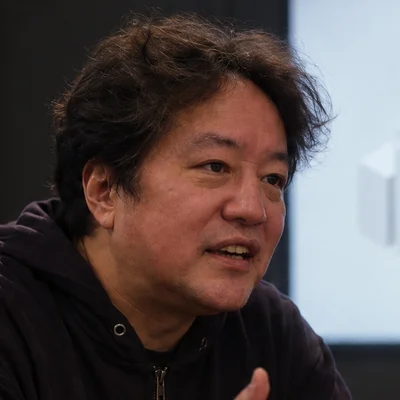 Tomoyasu HiranoTeleport CEO
 Gaku NoguchiTeleport Co-founder

On October 21, 2026, a fix was released for a critical vulnerability in the PHP programming language.1 Banks, online shops and others went into emergency maintenance, and some services were temporarily suspended.2
While many companies scrambled to respond, Teleport Inc. reportedly finished its own response in about 30 minutes.3
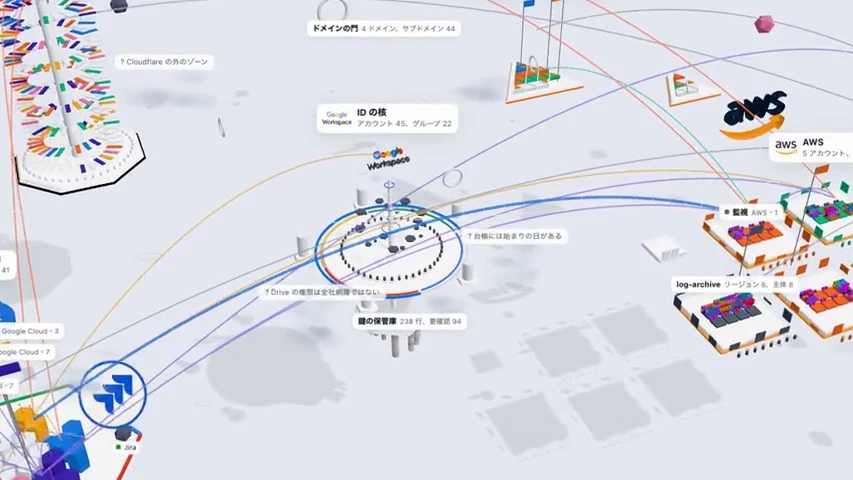
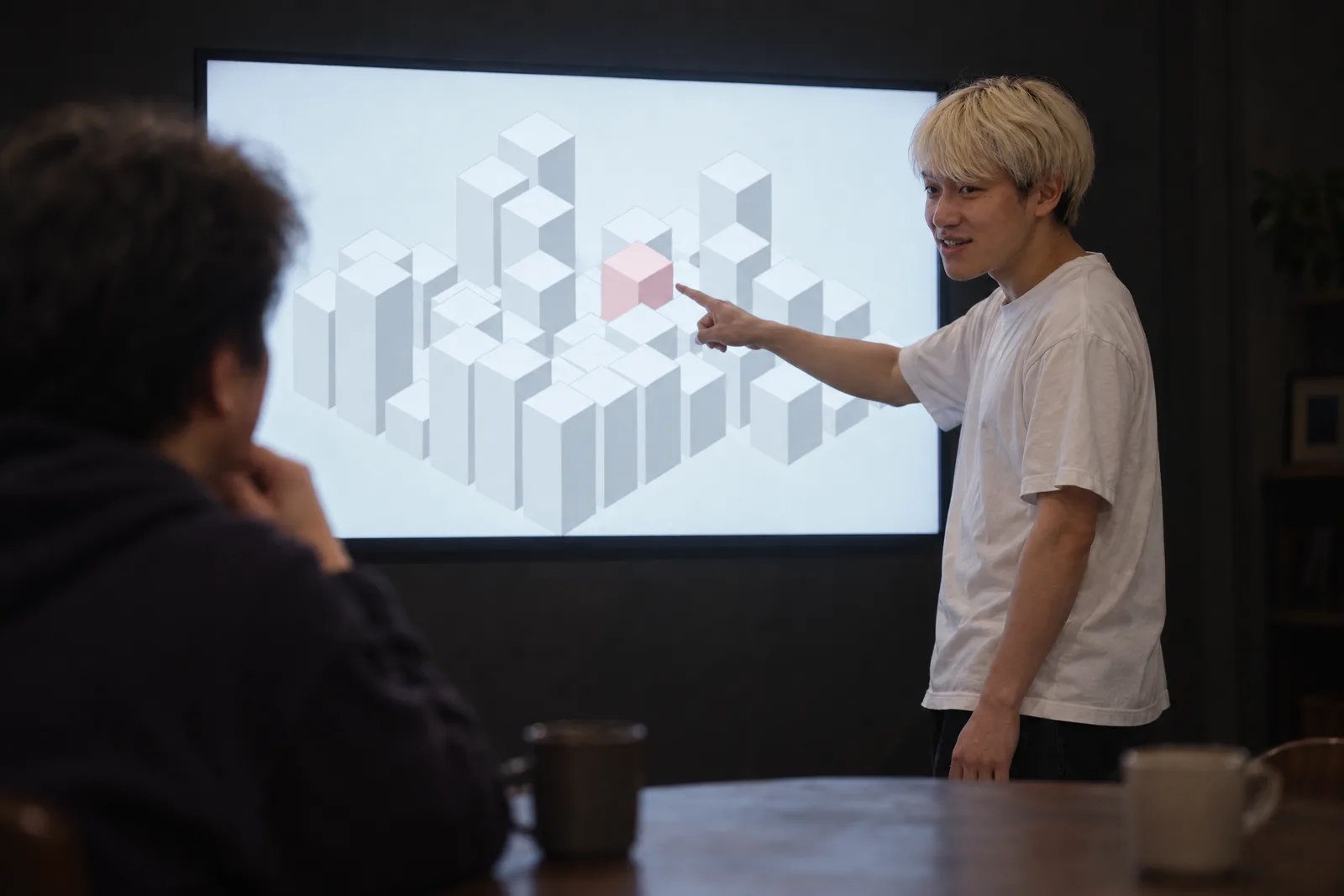
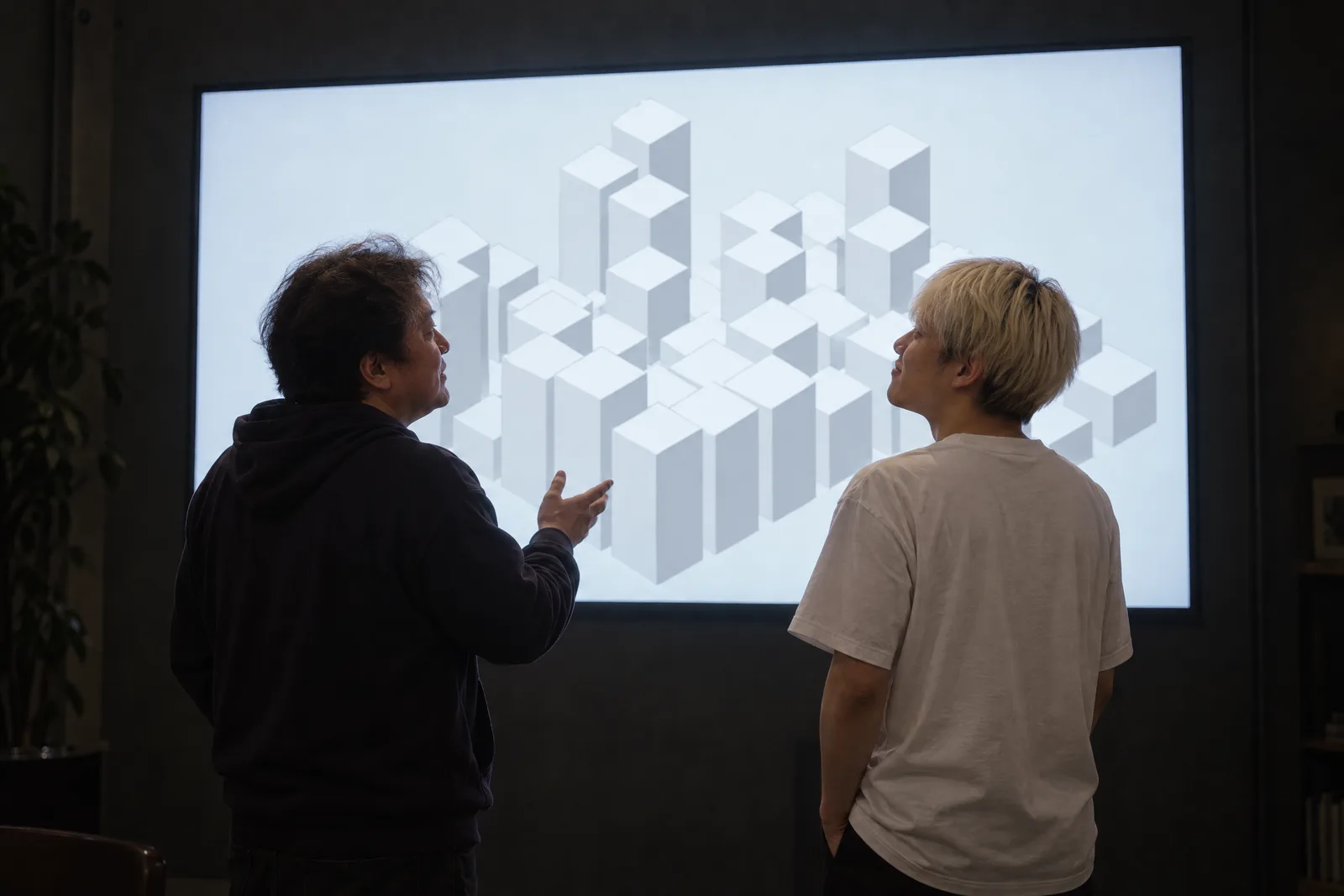
On the screen was a 3D world that looked like a city-building simulation game. Servers and databases stood like buildings, and the spots that needed attention were marked, based on what AI agents had investigated. People and AI agents walked through the city together, discussing what to check and how to respond.
It is a system called “CITY,” which Teleport has been developing for its own use.
Surprisingly, though, CITY was not built for security.
Teleport develops a platform where AI agents work alongside people. Under the banner of “turning everyday life into an adventure,” it is putting AI agents to work in many settings, from school education to media production and arts and culture.
Tomoyasu Hirano, CEO and media creator, and Gaku Noguchi, co-founder, design strategist and researcher. Neither of them specializes in security. So why did they turn their company’s digital environment into a “city”?
The audio is in Japanese, synthesized with AI from the two speakers’ voices. Tap a paragraph to listen from that point.
01For AI agents to work, they have to know the company
You can see it’s running. But you can’t tell what it’s running for.
Hirano
Because of this PHP incident, some people seem to think we’ve started a security company, but it’s actually the other way around. We were trying to set up a workplace for AI agents, and we ended up with something that also turned out to be useful for security.
To begin with, once you try to put AI agents to real work, you run into problems that are different from those of conventional software.
Noguchi
If you’re just automating a single task, you only need to give it the information that task requires. But once an agent works on an ongoing basis, it’s a different story.
Say you put an agent in charge of updating the website. Where is the code? Which services is it connected to? Who approves changes? Without knowing those things, it can’t do the job properly.
And that’s not information you teach once and you’re done. A company’s systems change every day.
Hirano
Exactly. We’re building a platform where agents join LINE and Slack and work alongside people. Our agents have even built a school website together with the teachers.
The more work you hand over, the more the agents themselves need to understand the environment.
But when we looked into our own company, we found servers that had been left untouched for years, and programs whose creators had already left.
You can see it’s running. But you can’t tell what it’s running for. Ask “Can we shut this off?” and nobody can answer.
Noguchi
The tricky part is that “there’s no documentation” isn’t the same as “we know nothing.”
Program code, cloud settings, access logs, old records. Clues are often left behind. If you examine each one and trace the relationships, you can recover a fair amount of the information you thought was lost.
But if there’s no record of what a conclusion was based on, there’s also a risk that the AI will make up a plausible-sounding explanation.
Hirano
We struggled with that too. It wasn’t as simple as having AI investigate and suddenly knowing everything.
How do you investigate something you don’t understand? How much do you need to confirm before you can trust it? What don’t you know yet?
As we repeated that work over and over, we built up our own know-how for sorting out our environment.
We turned that into a common format AI agents can understand. That was the beginning of CITY.
02Making a map is not the same as understanding correctly
Noguchi
What I find interesting, from a design perspective, is that this also brought the human problems into view.
Visualizing systems is generally thought of as turning complex information into an easy-to-read screen. But CITY is a little different.
First, it structures systems, data, permissions and how they relate to each other in a form AI can work with. Then it presents that information as an interface for people to understand.
So the 3D city isn’t really the core of CITY. It’s one way of showing it.
Hirano
The information for the agents came first. When we tried to show it in a way people could understand too, it turned into a city.
But that way of showing it turns out to matter quite a lot.
Your own systems become a city, with rows of buildings you can walk around. You can see what’s where, and you can talk with the agents too.
Even people who don’t know the technical side can start talking: “What’s this building?” “Oh, these two are connected.”
People who never understood an architecture diagram can now point at the same screen and talk about it.
Noguchi
That said, there are things you have to be careful about as a matter of design.
Once a map makes things visible, you start to feel that everything exists on it. Even real maps have roads that aren’t on them and information that’s out of date, right?
It’s the same with CITY. Having a beautiful 3D city doesn’t necessarily mean you’ve grasped everything about the company.
That’s why it’s important to distinguish confirmed information from inferred information, and to think about how to show the parts we don’t know yet.
Hirano
Yeah, I agree with that. Honestly, just being told “we don’t know this part” is incredibly valuable.
It’s hard for people to keep track of everything in their own company, but AI agents can keep investigating continuously. Of course there are limits, but at least we can move away from the old pattern of only searching around after a problem happens.
Noguchi
Besides, not everyone in a company needs the same information.
Engineers want the details of the configuration. Executives want to know what risks exist and what they need to decide. People on the front lines care about how it affects their own work.
Working from the same CITY, each of them can understand what they need from where they stand. I see a lot of potential in that.
03We responded in 30 minutes because we had been putting our city in order since August
Executives go to inspect their factories and stores. But how many of them have ever gone to look at their own company’s digital infrastructure?
Hirano
And that brings us to this PHP incident.
Since August, we’d been running our own company as a CITY. When the AI agents looked into it, they found things like entry points exposed to the outside even though nobody used them, permissions still held by people who had left, and systems whose alerts weren’t reaching anyone.
We had been sorting those out one by one.
So when this problem came up, we could look at CITY and see where we needed to check.4
We also have an agent called Sentinel that handles security, so we worked through the necessary steps while checking the situation, and finished within 30 minutes.3
Noguchi
This is easy to misunderstand, but I think what you did beforehand matters more than the result of finishing in 30 minutes.
If you find a program that hasn’t been updated in years, you have to think about whether it can be fixed at all, whether it can be shut down, or whether to replace it with something else.
Even if an update is technically possible, the person in charge can’t easily decide if they don’t know the impact on the business.
Hirano
Right. That’s exactly what came up from people who attended my talk.
They wanted to update PHP, but internal approval was stalled, so they had taken the service offline. And customers were complaining, too.
That’s not a case of engineers not trying hard enough.
If you stop this, what does it affect? Who takes responsibility for the decision? They ended up in an emergency without knowing those things.
Noguchi
A technical problem has turned into a problem of organizational decision-making.
So even if CITY gives you a grasp of the environment, that alone won’t necessarily solve it. The information has to reach the people with authority, and they have to be able to decide.
What matters isn’t gazing at the map, but using the map to move the work forward.
Hirano
Seen that way, this isn’t just about security either.
Executives go to inspect their factories and stores, and they visit the sales front lines too, right? But how many of them have ever gone to look at their own company’s digital infrastructure? Even among engineers, I think few people have a grasp of everything beyond their own area.
And these days, a large share of a company’s work runs on digital systems.
When you think about it, it’s strange to run a business without being able to see that.
04CITY briefs the experts on the company
Noguchi
But I think we should draw a clear line here.
Even if CITY helps you understand your digital environment, that’s a different job from the intrusion detection and defense that security professionals do.
There are already plenty of specialized products and technologies, and CITY isn’t meant to replace them.
Hirano
I really agree with that.
We’re not security experts, and we’re not trying to become them. If anything, I have deep respect for the people who have been doing the work in security all along.
But there are a lot of people who can’t explain their own company’s situation before they go to consult an expert.
And experts, too, should find it easier to work if they know what’s where and how it’s all connected.
Noguchi
There’s one more thing: we also have to think about the safety of CITY itself.
Collecting information about a company’s systems and permissions means you have to consider the risk if that information leaks. Who can see how much, where it’s stored, and how much authority the AI agents are given.
We need to think about the ability to understand the environment and the authority to actually make changes as separate things.
Hirano
Right. CITY deals with information that people and AI agents use to make decisions, so it’s not about letting it operate anything it likes on its own.
In that sense too, rather than offering it as a black box, we want to make it something engineers can verify.
That’s why we’re looking at open source.
05Release the technology for free, and offer the agents’ work as a service
Hirano
I felt it would be a waste to keep this to ourselves.
A large company can hire several experts, but small and midsize businesses, schools and small shops can’t. That doesn’t mean they can get by without understanding their digital environment.
So we want to release CITY’s common format and software so that engineers can use them freely.
Noguchi
The point of opening it up isn’t just that it’s free.
A company’s digital environment belongs to that company, so we want to avoid, as much as possible, a situation where you can’t understand it without using one particular vendor’s service.
Once the format is public, other developers can build new viewers, or connect other AI agents.
And being able to verify the mechanism that investigates your systems also matters when it comes to trust.
Hirano
Exactly. That’s why we’re preparing to release the technology we’ve been using.
On the other hand, actually keeping it running takes operational effort.
A company’s systems change every day, so you need an agent that keeps investigating them. One that tells you when it finds a new problem and keeps watch over the changes.
I think we could offer a service where Teleport dispatches agents like that.
An agent could even drop in on employees and give them a security quiz every week. Instead of leaving it to the few people with security knowledge, we want everyone to understand a little at a time.
Noguchi
Those who can run it themselves use the open technology. Those who want to hand off ongoing investigation and operations use a paid agent service.
So the idea is to separate access to the technology from the service that supports operations.
Hirano
That’s it. We’re still working out the specific pricing and how we’ll offer it, but the direction is clear.
Rather than locking up the technology and charging for its use, we want to create value in AI agents doing ongoing work.
06Take security knowledge beyond the experts
Hirano
And there was one more thing I felt strongly about during this incident.
Lots of people were anxious after seeing the news, but many of them didn’t know what they should do.
Is my computer OK? What about the company website? And what is PHP, anyway?
Of course, the technical information is out there. There are very detailed explanations, too. But it’s really hard for ordinary people to read and understand them.
Technology alone won’t solve this. I thought it was a job that media had to take on.
Noguchi
But I don’t think simplifying the information is enough to get it across.
Take this PHP issue: what a company executive wants to know is different from what a high school student wants to know. It’s different again for someone using a smartphone at home and someone who runs a website.
Even with the same event, if you can’t see how it relates to you, it doesn’t stick as knowledge.
Hirano
That’s exactly it.
Since I was young, I’ve been thinking about how to use music, video and internet technology to create new forms of expression and communication.
That was true of motion dive, and of the internet live shows I did with Ryuichi Sakamoto.
I never wanted new technology to belong only to the people who already knew it.
Now that we have AI agents, I think we can change the way media itself is made.
Noguchi
They can research information from around the world, read materials in different languages, and organize the same topic from many angles.
But accuracy is critical for security information, so we don’t want this to become something where AI mass-produces plausible-sounding articles.
What’s a confirmed fact, and what’s still at the research stage? If experts disagree, what exactly is the point of contention? I think the media should be able to convey that, too.
Hirano
Absolutely. We want experts to join in, too.
But I don’t think it’s enough to just rewrite experts’ difficult explanations in plain language.
There’s daily news, and if you want to know more, there are lessons, and fun experiment videos too. You could even experience attack and defense inside a game.
Whether you’re an elementary school student or a company executive, you can come in wherever your interest lies, and keep learning more deeply from there.
That’s the kind of media we want to make.
Noguchi
Media where a single news story opens up many entry points.
And it’s also important that gaining knowledge leads to actual action.
Instead of seeing the news and stopping at “sounds dangerous,” you understand what to check at your own company and who to talk to.
And if you have CITY available, you can connect what you’ve learned to your own digital environment.
So learning through the media connects with understanding your real environment.
07Build independent media that also covers CITY’s weak points
I want it to be media that properly covers what CITY lacks, and where existing products do better.
Noguchi
But I want us to design this media carefully.
If we launch a media outlet called Data is CITY, people may well assume it exists to promote our own technology.
That would narrow the topics we can cover.
Hirano
That’s not it at all. I don’t want to make media that just advertises CITY.
There’s a lot of great security technology out there, and researchers and companies around the world are pushing research and development forward at incredible speed.
I want to report on that properly. How technology is evolving, what’s happening, and what will become possible.
CITY is just one effort among them.
Noguchi
In that case, I want it to be media that properly covers what CITY lacks, and where existing products do better.
Without that kind of independent perspective, it won’t be truly useful information for readers.
Hirano
Of course. Making that kind of media means we’ll learn a lot ourselves in the end, and CITY will get better too.
Plus, we have an agent platform called Teleport.
AI agents can research the world, gather news, follow experts’ research and produce content in many formats.
Together with human editors and experts, we should be able to create a new kind of media.
Noguchi
Seen that way, CITY and Media aren’t just two applications of the same technology.
CITY is for understanding what state your own digital environment is in right now.
Media is for learning what’s happening in the world around that environment, and keeping your understanding up to date.
Without understanding both the situation inside and the changes happening outside, it’s hard to make good decisions.
08In an age of building with AI, we also need ways to protect with AI
Hirano
I think something interesting is about to happen.
Even people who’ve never studied programming will build websites and develop apps together with AI agents.
Things that used to require asking an engineer will become possible for all kinds of people.
That’s what our mission of “turning everyday life into an adventure” is about.
But adventure doesn’t mean doing reckless things left and right. To take on something new, it’s important to really know where you are now and what situation you’re in.
If anyone can build things, that also means everyone gets involved in running systems and keeping them safe.
Noguchi
The barrier to building is getting lower, but the impact of what gets built on society isn’t getting any smaller.
If anything, as AI agents add more systems and connect them to one another, understanding the whole becomes even harder.
That’s why it isn’t enough to have AI build systems for us. We also need a way to keep understanding where and how what we’ve built is running.
Hirano
Attackers are using AI too, and from here on, AI will likely play a big role on the defense side as well.
But what we want to do isn’t to hand that whole fight over to AI.
We want everyone to be able to understand their own digital environment, and to work out the measures they need, with help from experts.
We release the technology for that, and build media for learning.
Noguchi
So it’s about not leaving security as a problem for a handful of experts.
Not taking work away from experts, but making it possible for experts and everyone else to share the information they need and work together.
Hirano
Right. We ourselves learned a lot by building CITY.
It’s our own company, and yet we knew this little about it?
Just being able to see that, I think, changes a company’s work quite a bit.
CITY was originally born so that our AI agents could do their work. As a result, people can now see their own digital environment too. That was a pretty fascinating discovery.
So next, we want to try it not just by ourselves, but with all kinds of people.
Data is CITY is only just getting started.
Speakers
Tomoyasu HiranoTeleport CEO / Media creator
Born in 1974 in Kiryu, Gunma. After hosting Nippon Broadcasting’s “Tomoyasu Hirano’s All Night Nippon,” he founded Digital Stage in 1998 and developed the visual performance software “motion dive” and the web design software “BiND for WebLiFE,” among others. Since the early days of digital media, he has explored the possibilities of technology and expression, including through the “skmts” project, which brought Ryuichi Sakamoto’s live performances to the world over the internet. In 2021 he founded Teleport Inc., where he works on an AI agent platform and on education and media businesses.
Gaku NoguchiTeleport Co-founder / Design strategist and researcher
He has been involved in research at Kyushu University, and as co-representative of iQ Lab works on projects that cut across design, technology development and real-world implementation. He specializes in UI/UX, service design, research and business strategy. As a co-founder of Teleport Inc., he is designing the technologies and experiences that let AI agents and people work together.
This piece reconstructs the two speakers’ perspectives and their thinking behind CITY’s development as a dialogue, based on a talk by Tomoyasu Hirano, a video message from Gaku Noguchi and Data is CITY’s published materials. It is not a verbatim transcript.
Notes
- 1
On October 21, 2026, at 14:00 UTC (11 p.m. Japan time), PHP released fixes for two critical vulnerabilities (severity 9.2 on CVSS v4.0). The fixes cover each release line from PHP 8.2 onward; no official update has been issued for 8.1 and earlier. Source: PHP: 2026 News Archive Back to text
- 2
Among the reported cases were Shizuoka Bank’s temporary suspension of online banking and emergency maintenance at BASE and at game services (news reports). Sources: Nikkei (in Japanese), Impress Watch (in Japanese) Back to text
- 3
“About 30 minutes” and “within 30 minutes” are based on Teleport’s internal records and have not been verified by a third party. Back to text
- 4
Amazon observed what appeared to be attempts targeting this vulnerability on October 17, four days before the fixes were released. Besides updating, it recommends checking logs from October 17 onward for signs of intrusion. Source: Amazon Threat Intelligence Back to text